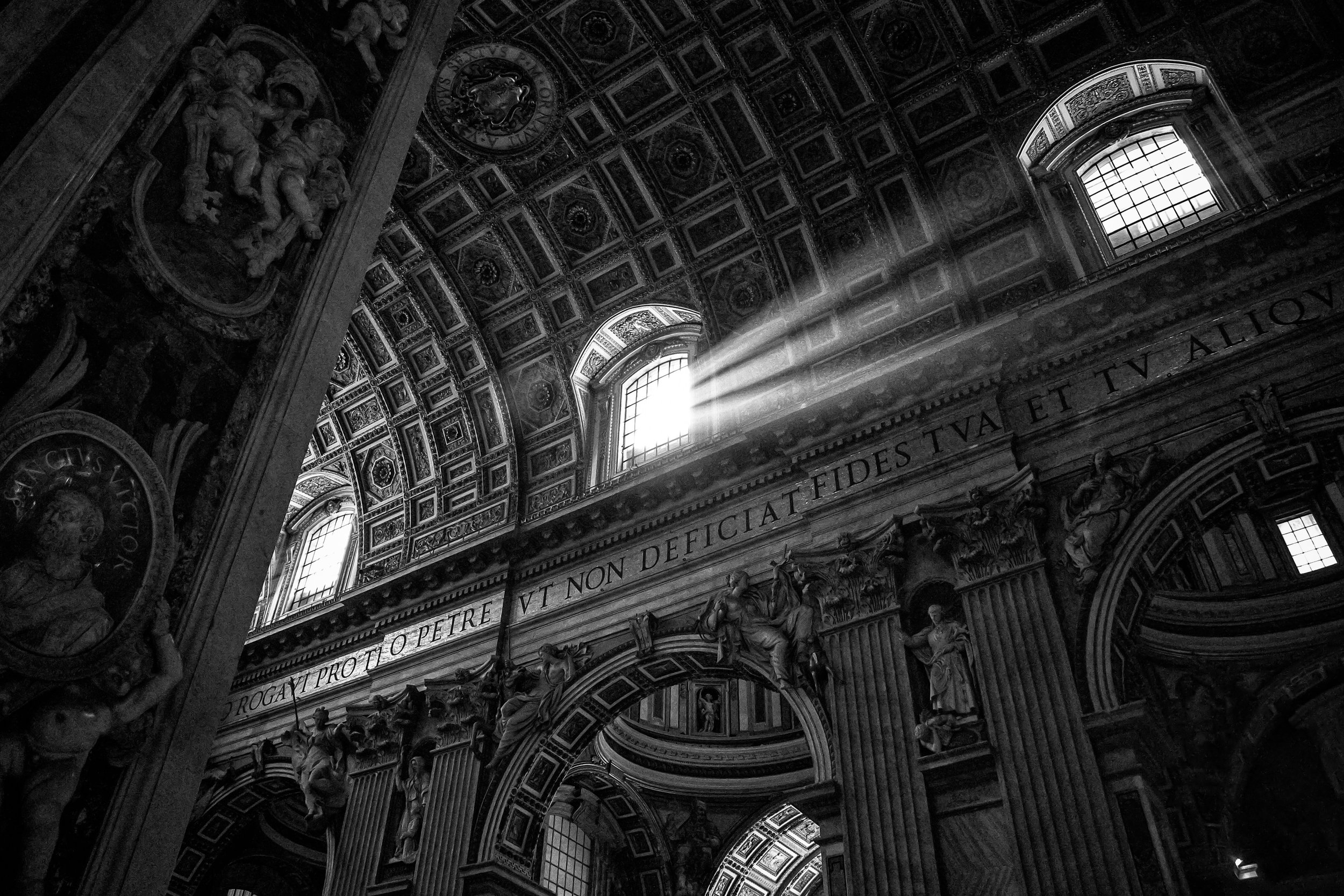
Spiritual Direction
Developing your spiritual life
as per history’s exceptional leaders
What is a common characteristic of history’s great contributors and leaders?
One that could carry their calling, gifts and flaws? Offer enhanced layers of motivation and insight? And enrich their personal experience in the midst of it?
The answer is spiritual formation: an interior spiritual life that enabled them to invest in who they were and an exterior spiritual framework to navigate the world they found themselves in.
It's a reality modern culture overlooks: high responsibility and influence are usually met with performance advice and psychological technique. This is valuable but incomplete, limiting not only people’s professional endeavours but also their personal experience and reputational legacy.
What method can you use to invest in spiritual formation in a similar fashion?
One with ancient pedigree but able to meet modernity’s challenges? Deep but pragmatic? Timelessly trusted in high influence contexts?
Spiritual Direction (a guide of sorts) is the answer: an ancient discipline that grew out of early Christian monasticism to support spiritual growth amongst high responsibility.
Whilst it has mostly retreated into serving Bishops and Senior Clergy given our modern, secular culture, its roots draw from a much broader tradition of serving people across a high influence life, from kings and knights to merchants and musicians.
As a qualified Spiritual Director, I specialise in applying it to people navigating high stakes moments and high influence lives.
How does it work?
My Spiritual Direction offer is structured the same way as the Personal Formation service: Temporary, Annual and Retained.
Naturally, it can cover a range of topics secular dialogues would not. Equally, it can cover all the topics a secular dialogue might but instead apply a spiritual or theological lens to find a different purpose and perspective.
If you have a faith we can also navigate how to integrate it more productively and proactively into your work.
What is this not?
Much of what's on offer for high-influence people (stoic resilience, secular mindfulness, performance psychology) asks you to manage yourself better.
Christian spirituality asks a different, deeper question: not just how to endure or optimise, but who you're becoming in the process, how you develop a relationship with something beyond yourself.
Equally, a lot of the spiritualism increasingly on offer is abstract and esoteric, whereas Christian spirituality, whilst connected to the meta, is deeply rooted in something earthy and practical.
How does it work?
Spiritual Direction is structured along the same lines as my Personal Formation work: Temporary, Annual and Retained.
It leans towards questions and issues relating to your personal context and formation that are beyond the boundary of a secular dialogue.
It will likely cover issues a secular dialogue might touch on but from a much more spiritual and theological centre.
And, if you have a faith, help you navigate how to integrate it more productively and proactively into your work.
Addressing the evergreen complexities of a high influence life from a spiritual perspective.
Dealing with the spiritual traps generated by a high influence life.
Navigating the meta issues generated by the fragmented, fast changing era we inhabit.
Exploring Christian spiritual perspectives and practices overlooked by modernity.
Drawing inspiration from exceptional people who integrated their faith into their work.
Integrating your faith (if you have one) into your work and leadership.
-
It exposes spiritual questions, is a minefield of spiritual traps and calls for spiritual wisdom.
-
Transcendent but robust and practical. Timeless but culturally and personally relevant. Challenging but accessible.s here
-
Spiritual Direction is the provision of regular, supportive, intentional conversations and practices that help you grow spiritually.
Imagine you went on retreat to a monastery and spent time with the Abbot focusing on spiritual growth. It would not be like modern counselling or coaching, which point directly at psychological or material needs, but something older and deeper. He would then recommend you hold regular conversations to maintain progress. This is Spiritual Direction.
It is a professionally trained role that grew out of the early Christian monastics to support people on their spiritual journey. And across thousands of years supporting monarchs, bishops, knights, merchants, artists and intellectuals it has developed into the art and science of helping leaders with their spiritual growth.
The primary difference being you don’t need to go on retreat to access it: Spiritual Direction brings the conversations to you.
-
No is the simple answer. And, if you do, nor do you have to be any particular denomination.
However there are, of course, areas we can take this if you do. Or if you are seriously exploring it.
Naturally, historically, our culture was much more religiously centred than it is now. And not just in terms of abstract belief systems but in terms of rituals, festivals, symbolism, the collective experience etc. Which fed into the discipline and experience of Spiritual Direction.
-
Personal formation you can think of as the "what" - the territory (identity, power, isolation, discernment, character) that we are engaging with.
Spiritual direction is one of the "how"s available within that territory: a specific, historic discipline for engaging with those questions in a more theological and prayerful manner.
“After twenty years of relentless work building my business, I sold it. Despite it giving me almost limitless options I was surprised to feel so directionless and dissatisfied. This kicked off a new spiritual curiosity in me so I did some things like walked the Camino way, read a lot and began to lean more into my cultural inheritance.
Eventually, I recognised I needed someone to help me navigate this season but I didn’t know how or who. Whilst I wanted more spiritual depth, I didn’t want to speak with a vicar; I’m not a Christian (yet) and I don’t think they’d understand my life. Equally, I didn’t want a secular business type coach because they wouldn’t offer the spiritual engagement I was looking for.
A friend recommended a podcast with John on it and he was exactly what I was looking for: someone who could bridge both worlds. He was exactly what I was looking for.”
Family Business Executive